Method for direct measurement of functional avidity of T cells
Keywords
TCR avidity, T cell activation, antigen-specific T cells, cancer immunotherapy, autoimmune disease, infection & vaccination
Invention Novelty
This innovation presents a groundbreaking, rapid, scalable and automatable method for directly measuring the avidity of T cells, which is crucial for immune response effectiveness. The method quantifies avidity by assessing the downregulation of TCR components, specifically of CD3 in activated, antigen-specific T cells. This novel approach allows researchers and clinicians to distinguish between high-avidity and low-avidity T cell responses, thereby offering advancement over conventional methods.
Value Proposition
This technology offers significant value for immunology research and clinical applications by providing a streamlined method to directly measure T cell avidity. It bypasses the need for labor-intensive expansion and titration protocols, does not rely on MHC information or multimer generation, and significantly reduces processing time and sample requirements. For clinicians, it enables precise assessment of immune response quality, aiding in treatment decisions and patient stratification, especially in infectious diseases, cancer immunotherapy, and autoimmune disease management. The method is easily adaptable, compatible with standard flow cytometry platforms, and suited for both personalized immune monitoring and high-throughput cohort analysis.
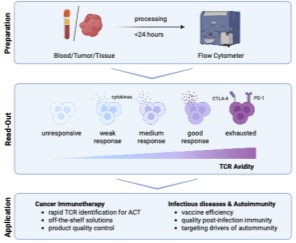
Fig. 1: Rapid determination of T cell avidity (modified after L. Loyal)
Technology Description
The novel method involves three key steps: providing a T cell population, exposing them to antigens, and measuring the level of TCR components, specifically CD3, in activated T cells. This technology leverages the biological phenomenon where stronger TCR stimuli lead to more significant CD3 downregulation, directly indicating TCR avidity and immune response effectiveness. Practical implementation involves culturing PBMCs with antigens, identifying activated T cells through surface markers, and quantifying CD3 expression using flow cytometry (Fig.1). The method is highly versatile, compatible with various antigen types and T cell subsets, and can be combined with additional analyses like cytokine production assessment and measurement of exhaustion markers. It is easily implementable in labs with standard flow cytometry capabilities and can be automated for high-throughput applications.
Commercial Opportunity
In-licensing or collaboration for further development.
Development Status
Initial PoC studies have been performed at Charité – Berlin Universitätsmedizin, Berlin Institute of Health (BIH). KI-supported ICI prediction efficacy, implementation in adoptive T cell therapy, and identification of therapeutic T cell receptors are currently investigated, co-funded by the national Translational Tandem Program for Gene- and Cell-based Therapies (nTTP-GCT).
Patent Situation
A European priority application “Method for direct analysis of functional avidity of T cells” was filed in 2022, followed by a PCT application PCT/EP2022/057253 and nationalization in the EU (EP4308933A1).
Further Reading
Loyal L. et al. Science. 2021 Oct 8;374(6564):eabh1823. doi: 10.1126/science.abh1823.
Loyal L. et al. European Journal of Immunology (accepted)/bioRxiv doi: https://doi.org/10.1101/2024.08.21.608923.

Institute of Origin