EutectoDerm: Deep eutectic solvent for topical treatment of wounds
Invention Novelty
The invention introduces a pharmaceutically exploitable deep eutectic solvent (DES) composed of thymol and betaine for the treatment of dermatological conditions, particularly infected and non-infected acute and chronic wounds. The present work demonstrates that specific thymol:betaine (THY:BET) molar ratios exhibit unexpectedly strong antimicrobial and anti-inflammatory activity against clinically relevant pathogens such as MRSA, P. aeruginosa and E. coli in human ex vivo wound infection models, clearly outperforming reference products like silver dressings and a standard wound gel. At the same time, the invention reveals that a very short topical application in a mouse wound model, followed by removal of the liquid, preserves this antimicrobial efficacy while markedly reducing cytotoxicity and tissue damage. Furthermore, the THY:BET system is shown for the first time to act as a high-capacity solvent for poorly water-soluble natural antioxidants and anti-inflammatory molecules, enabling multifunctional formulations that combine antimicrobial, anti-inflammatory and pro-regenerative activities in a single biodegradable platform.
Value Proposition
This technology offers a new therapeutic option for the management of difficult-to-treat wounds and inflammatory or infectious skin conditions, addressing major clinical and economic burdens associated with chronic ulcers, postoperative infections and multidrug-resistant pathogens. The THY:BET DES provides rapid biofilm penetration and broad-spectrum antimicrobial action with demonstrably low cytotoxicity under a short contact protocol. This supports shorter treatment times, simpler application schemes and improved patient comfort, while reducing dependence on systemic or topical antibiotics and thereby contributing to antimicrobial stewardship. Overall, the invention delivers a clinically relevant, scalable and environmentally favorable alternative to conventional antiseptics and silver- or antibiotic-based wound therapies.
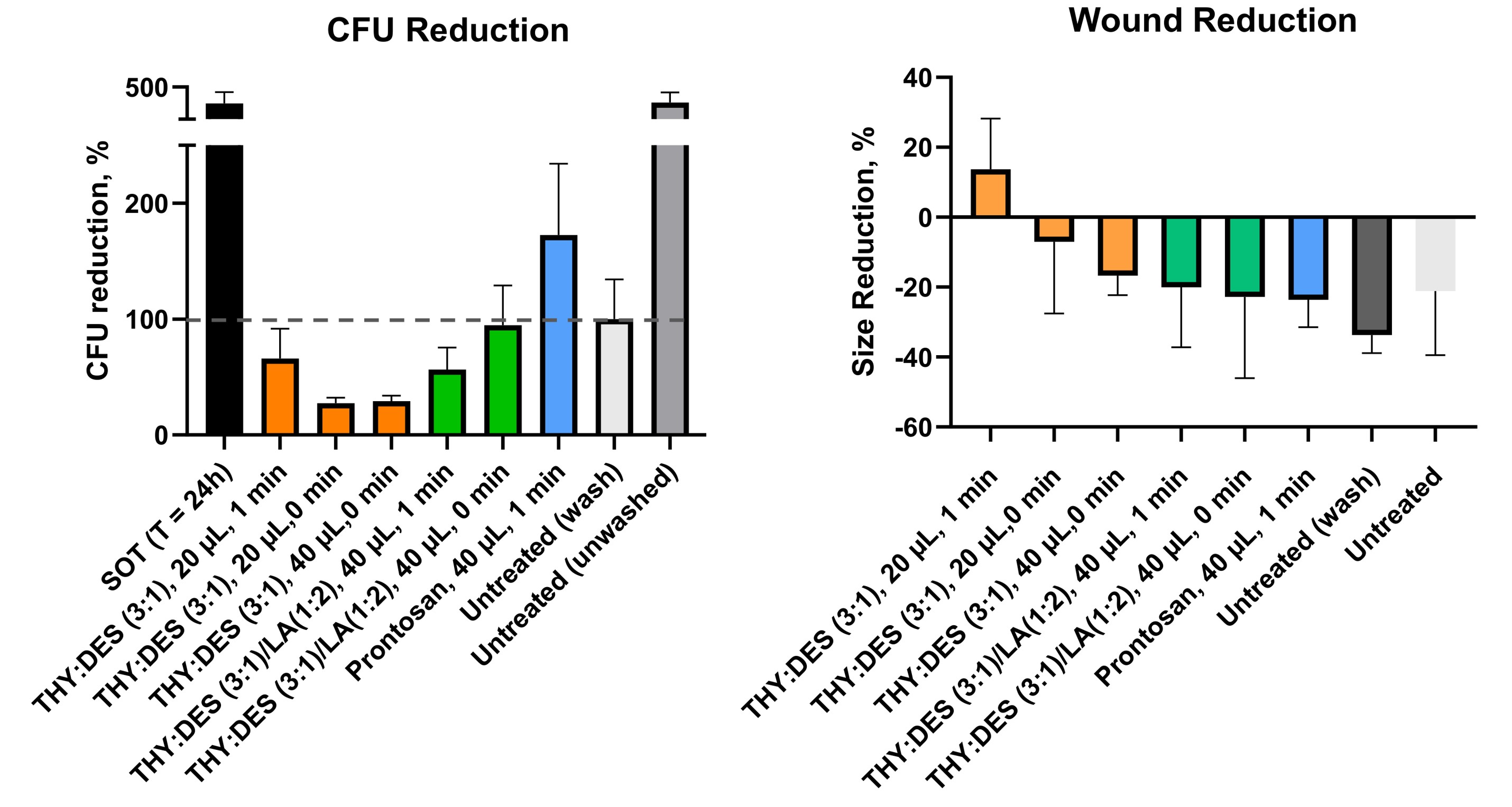
Antimicrobial activity using THY:BET DES in a mouse wound model, Source: F. Rancan, Charité
Technology Description
The core of the technology is a DES formed by mixing thymol and betaine at defined molar ratios, typically between 15:1 and 2:1, with preferred ranges from 5:1 to 3:1. In human ex vivo wound models, topical application of small volumes of THY:BET at ratios from 3:1 to 10:1 produced reductions of at least three log steps in bacterial counts for MRSA E.coli and P. aeruginosa. In vitro studies on THP-1 macrophages showed reduced toxicity for the eutectic mixture compared to thymol alone, with moderate cytokine responses and no strong IL-6 induction. In vivo, application of THY:BET 3:1 with or without antioxidants like linolenic acid (LA) and immediate wash showed the best antimicrobial efficacy in a MRSA wound model, application for 1 minute showed better wound healing efficiency, without any toxicity.
Commercial Opportunity
The DES technology covers topical liquids, sprays, drops, emulsions, hydrogels and antibiofilm materials such as dressings impregnated with the eutectic solvent, designed for treating wounds and microbial or inflammatory skin disorders in human and veterinary settings. The technology is open for co-development or licensing.
Development Status
After showing the efficacy in a mouse wound model, further characterization of the DES, the testing of applicable doses in humans and preparation of a human study are planned.
Patent Situation
A PCT application has been filed (priority: Sept. 2, 2025)

Institute of Origin