Green Rodenticide - Use of a Grayanotoxin-Based Agent for Rodent Control
Keywords
naturalrodenticide,non-anticoagulant,grayanotoxin,biodegradable,environmentallyfriendlyrodentcontrol,baitbox,toxicbait
Invention Novelty
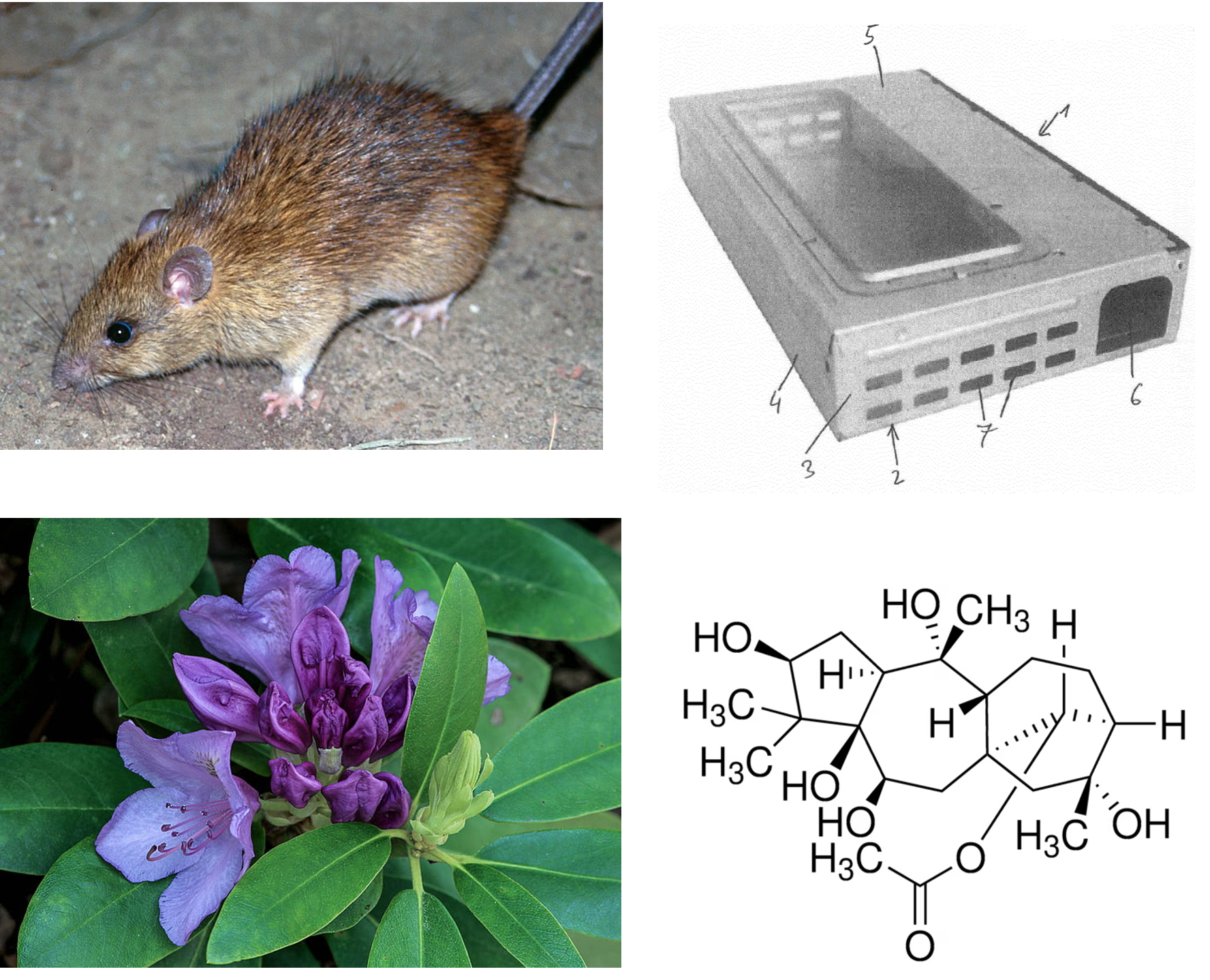
The technology provides a novel rodenticide concept using grayanotoxins - natural, biodegradable neurotoxins - obtained from plant extracts as highly effective non-anticoagulant acting rodenticides. The compounds can be applied for standardized bait formulations presented in a bait box tailored for mice and rats, reducing risks of resistance and secondary poisoning in predators and non-target species, thereby offering a targeted, environmentally safer, and resistance-mitigating solution.
Value Proposition
The invention introduces a biologically based rodenticide using grayanotoxins, which offer a safe, effective, and environmentally friendly alternative to conventional anticoagulant rodenticides, that suffer from persistence, bioaccumulation, resistance, and animal welfare issues. Designed for pest control in settings such as agriculture, food storage, municipalities, and hygiene services, the product uses natural carriers like honey to attract rodents and can be delivered as feeding bait or via contact surfaces. Specialized bait boxes enhance safety, restrict access to rodents, and prevent contamination, with features like insect protection and waterproofing. The technology supports stricter regulatory requirements, improves environmental and animal welfare profiles, and appeals to eco-conscious customers. Its versatile scope of application - including sachets, cartridges, sprays, foams, and combination products - enables flexible, sustainable pest management and helps licensees meet evolving market and regulatory demands.
Green rodent control
Technology Description
The natural neurotoxic acting grayanotoxins are obtained as extracts from certain Ericaceae, namely Rhododendron, and are combined with an attractive, preferably honey- or sugar-based carrier to create highly palatable feeding baits or contact agents for rodents. The formulation contains 10–300 mg of grayanotoxin per kilogram of carrier for maximum effectiveness. It can be delivered as liquid, paste, gel, spray, foam, or applied to grains, pellets, or specialized bait boxes. The bait boxes are engineered for safety and efficiency, featuring access controls, ventilation, and compartments for bait or scratching surfaces that transfer the toxin to rodents. The system is versatile, suitable for use in fields, orchards, storage facilities, and buildings, and can optionally combine grayanotoxins with anticoagulants for enhanced efficacy.
Commercial Opportunity
This technology enables flexible, sustainable pest management for pest control in settings such as agriculture, food storage, municipalities, and hygiene services, helping licensees meet evolving market and regulatory demands.
Development Status
Field trials with mice show high control rates and no resistance. Optimized extraction protocol for Rhododendron leaves is available. Use of concentrated raw extracts for bait preparation is probably sufficient. A professional data gap analysis has been conducted.
Patent Situation
Patent family based on WO2018002292 with granted patents in EP, CA and AU, and granted patent EP3952653.