
Method for Assessing Out-of-Specification (OOS) CAR T-Cell Products and Predicting Patient Response
Keywords
CAR-T cell therapy, CD19, prognostic biomarkers, therapy response, out-of-specification (OOS) CAR T-cell products
Invention Novelty
This innovation presents a novel diagnostic approach for predicting the therapeutic response of patients subjected to CD19-chimeric antigen receptor (CAR)-T cell therapies utilizing a novel combination of predictive biomarkers. Developed as part of a clinical study, with third-generation CAR-T cell products, the researchers identified the expression of CD39 and CD27 to be directly associated with therapy response. This biomarker combination offers the capability to evaluate out-of-specification (OOS) CAR-T cell products by determining whether a sufficient absolute number of therapeutically effective CAR-T cells is present (Fig. 1).
Value Proposition
This biomarker combination provides a rapid, cost-effective method for quantifying therapeutically active CAR-T cells, making it a valuable tool for quality control and clinical decision-making. It enables reliable prediction of patient response to CAR-T therapy and supports personalized treatment selection. The assay is especially advantageous when only limited starting material is available such as with OOS CAR-T cell products. By enabling data-driven treatment decisions and reducing the risk of ineffective therapies, this innovative assay could broaden patient access, lower costs associated with OOS products and help shape future regulatory standards.
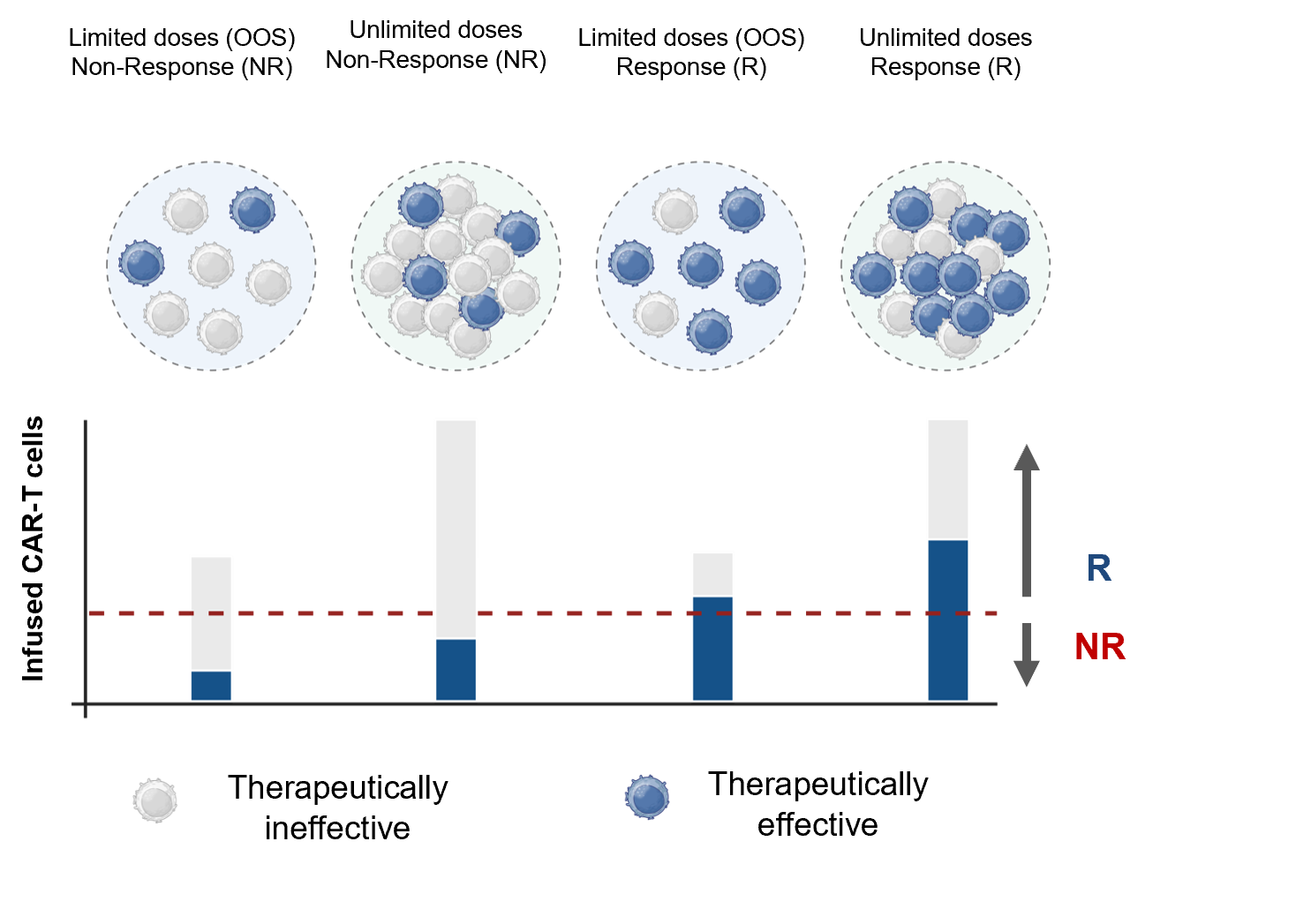
Fig 1. The absolute number of therapeutically effective CAR-T cells determines therapy response
Technology Description
Flow cytometry analysis of CAR-T cell infusion products revealed that CAR-T cells bearing a CD39- and CD27- phenotype are strongly associated with good clinical response. While CD39 denotes exhausted or dysfunctional T cells, the absence of CD27 indicates a higher effector capacity. In combination, these markers represent functional effector or effector-like T cells and can thus be used to determine the number of therapeutically effective CAR-T cells in the product. Crucially, these two markers can be measured with any standard FACS instrument, enabling rapid and low-cost evaluation of CAR-T cell batches.
Commercial Opportunity
Seeking collaboration or strategic partnership for further development.
Development Status
Initial PoC studies have been performed at Charité Universitätsmedizin Berlin and Universitätsklinikum Heidelberg.
Patent Situation
A PCT patent application has been filed in 2024 (PCT/EP2024/060760, priority 2023).
Licensing Contact

Dr Céline Christiansen-Mensch
Technology ManagerT: +49 (0)1590 4836722
christiansen@ascenion.de
Institute of Origin