
Particle-mediated transport of dissolved active agents into hair follicles
Keywords
Transport into hair follicle, delivery of active agents, particle-mediated transport, pharmaceutical application, cosmetic application
Invention Novelty
The delivery of particles into the hair follicle is known, however, there has been no efficient means of delivering dissolved active ingredients into hair follicles, such as dissolved drug molecules or cosmetically active molecules, for effective and prolonged skin penetration or sustained skin disinfection. The new solution's unique feature is that any dissolved active ingredient can benefit from improved follicle penetration. Until now, this was reserved for active ingredients that could be encapsulated in particles or covalently bound to them. Substances that would not penetrate the skin without follicle penetration and are not suitable for conventional particle penetration can now penetrate the hair follicle and reach their target via the weaker barrier in the hair follicle or its target directly in the hair follicle.
Value Proposition
The invention is highly useful for administering active agents to a subject via topical administration. The hair follicle is a site where an agent can have direct influence on the anatomical structures and cells of the follicle and which can serve as an entry site for agents that are active in the skin, but also act systemically.
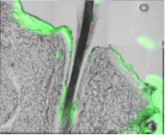
Fig. 1: Confocal microscopic image of a hair follicle. Source: Charité
Technology Description
Lipid nanoparticle and nanocrystal-containing formulations were applied as dispersions in a liquid or semi-solid dispersion medium. Among others, fluorescein (as a small molecule surrogate, see Fig. 1), green fluorescent protein (GFP) and FITC-BSA (as large molecule surrogates) have been used to prepare particle-containing formulations. In contrast to other compositions known, the active agents are not directly coupled to the particles nor they are incorporated in the particles. The compositions were applied on fresh porcine ears and sections from skin and hair follicle were analyzed by epifluorescence microscopy. Images were taken and the penetration depth of the fluorescein-containing molecule was directly measured. Both spherical and non-spherical particles have been shown to significantly improve penetration depth of dissolved small molecules or protein-based ingredients.
Commercial Opportunity
The inventive composition can be useful for pharmaceutical and cosmetic applications concerning hair growth, hair loss, hair coloring, acne or other interventions where efficient delivery of active agents are necessary and beneficial. In addition, the hair follicles can also serve as a reservoir in which an active ingredient can remain for an extended period of time while continuously diffusing into the surrounding tissue. The hair follicle can also act as an elevator that brings substances such as painkillers into the tissue more quickly. The new technique could also be used for deep skin disinfection.
The technology is open for licensing, further co-development is highly welcomed.
Development Status
The influence of size and amount of the particles on penetration depth and efficacy of the active agent is under investigation. Actually, the technology can be classified as being TLR3: identification and characterization of the product candidate.
Patent Situation
Patents are pending in US and EP with priority of June 24, 2021.
Further Reading
Klein et al. (2025), Int. J. Pharm. 670:125200

Institute of Origin