The new antibiotic BTZ-043 was discovered at the Leibniz-HKI in Jena, one of Ascenion’s partner institutes. It has been developed for clinical use in cooperation with the Tropical Institute at the LMU Hospital Munich, with funding from the German Center for Infection Research (DZIF).
Supported by its technology transfer partner Ascenion, Max Delbrück Center has entered into a licensing agreement with Kite providing the company with non-exclusive rights to use the transposon system for the genetic engineering of T cells.
The additional funding will be used to build new product offerings for biopharmaceutical clients, fuel growth within the United States (US), and develop a leading foundation model for pathology in collaboration with Mayo Clinic.
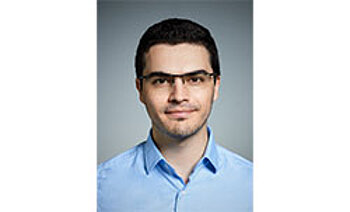
Alejandro Restrepo Arango has joined the Brunswick team as technology scout. He will closely work with HZI scientists, supporting them in all IP- and transfer-related aspects of their work.
Spin-offs, start-ups, inventions from research institutes and universities – all these help to secure Germany’s leading economic position. Read more about start-ups, and the part we play in them, in our Annual Review.
The spin-off from the Max Planck Institute for Molecular Genetics and the Charité – Universitätsmedizin Berlin raised EUR 1.3 million to further advance its AI-Digital HealthTech platform.
The financing was led by NBank Capital and CARMA FUND I, and supported by a group of experienced business angels. The spin-off will use the proceeds to further advance its groundbreaking approach to improving the safety of organ transplantation.
A high-caliber jury selected ‘PROTON’ from HZI and ‘Bacta Implants’ from MHH as winners out of nine finalists at the 2nd IBT portfolio conference. The funding enables further translational development of the inventions towards application.
The Max Delbrück Center in Berlin and the French biotech company AlgenScribe want to jointly develop and improve their genome editing tools. They aim to utilize synergies to develop cell therapies for genetic diseases.
Prof. Dr Christian Hertweck, Head of the Department of Biomolecular Chemistry at the Leibniz-HKI and Professor of Natural Product Chemistry at the Friedrich Schiller University Jena, has been awarded one of the prestigious ERC Advanced Grants by the European Research Council (ERC).
HepaRegeniX GmbH have announced the closing of a Series C round. The new funds will be used to advance the clinical development of the company’s candidate HRX-215 for liver regeneration.
Captain T Cell, a spin-off from the Max Delbrück Center (MDC), focuses on developing T cells to target solid tumours. The funds are intended to expedite the development and deployment of a new generation of T-cell therapies in clinical settings.
A new radiopharmaceutical that enables earlier detection and targeted treatment of small-cell lung carcinoma has been developed at the Medical University of Innsbruck (MUI), and licensed to Evergreen Theragnostics with Ascenion’s support.
The University Hospital Bonn (UKB) and the Helmholtz Centre for Infection Research (HZI) are cooperating with the Japanese pharma company Eisai to further develop an antibiotic for the treatment of tropical diseases.


![[Translate to English:]](/fileadmin/_processed_/8/8/csm_MDC_neu_web_fcfe745015.jpg "[Translate to English:]")
![[Translate to English:]](/fileadmin/_processed_/7/9/csm_Aignostics_2024_5ab1d03efe.jpg "[Translate to English:]")

![[Translate to English:]](/fileadmin/_processed_/0/8/csm_Allogenetics_89b6f9b192.jpg "[Translate to English:]")
![[Translate to English:]](/fileadmin/_processed_/7/2/csm_HZI_MHH_60581dd85f.jpg "[Translate to English:]")